3 Emerging Technologies That Are Transforming Family Dentistry

You might be feeling what many families feel when it comes to dental care. You want treatment that is gentle, clear, and worth the cost, but it can be hard to know what has really changed and what is just marketing. If you have ever sat in a waiting room wondering whether modern tools can actually make visits easier for you or your child, that feeling makes sense. Dental care has changed a lot, and some of those changes are making appointments faster, more precise, and less stressful. In simple terms, the biggest shifts in 3 Emerging Technologies That Are Transforming Family Dentistry come down to better imaging, smarter digital planning, and new ways to repair teeth with less discomfort and more accuracy, including advances offered by an Invisalign dentist in Plainfield.
Because of this shift, you might also be asking a fair question. If technology is moving so quickly, how do you know what helps your family and what simply sounds impressive? That is where it helps to look at how these tools affect real care, from checkups and fillings to planning more complex treatment with a trusted family dentist.
Why are new tools changing the way family dentistry feels for patients?
For many people, the hardest part of dental care is not always the treatment itself. It is the uncertainty before it starts. Will it hurt? Will it take several visits? Will the dentist find something that becomes expensive later? Traditional methods often worked well, but they sometimes left room for guesswork, repeat visits, or longer chair time. That can be tough for busy parents, anxious children, and older adults who want a smoother experience.
New technology helps reduce some of that strain by making problems easier to spot early and treatment easier to explain. In many cases, digital systems allow dentists to show you what they see on a screen, rather than asking you to trust a vague description. That matters, especially when you are making decisions for your whole family. A recent review on artificial intelligence in dentistry points to growing use of AI supported tools for diagnosis and planning, which can help improve consistency and support clinical judgment.
How is artificial intelligence reshaping modern family dental care?
AI can sound intimidating at first, but in a dental office it often works in a quiet, practical way. It can assist with reading images, highlighting areas of possible decay, bone loss, or other concerns that deserve a closer look. It does not replace the dentist. It supports the dentist by adding another layer of review.
Why does that matter for families? Imagine a child with very early signs of cavities, or a parent with gum changes that are easy to miss in the early stage. When software helps flag subtle patterns, treatment may begin sooner, when care is simpler and less costly. Research on AI assisted diagnostic systems in oral health suggests these tools may improve detection and help with treatment planning across routine dental settings.
That does not mean every office uses AI the same way, and it does not mean technology is always right. It means your dentist may have stronger tools to support careful decisions. For patients, that can lead to more confidence and fewer surprises.
Can 3D imaging and digital scanning make family dentistry more comfortable?
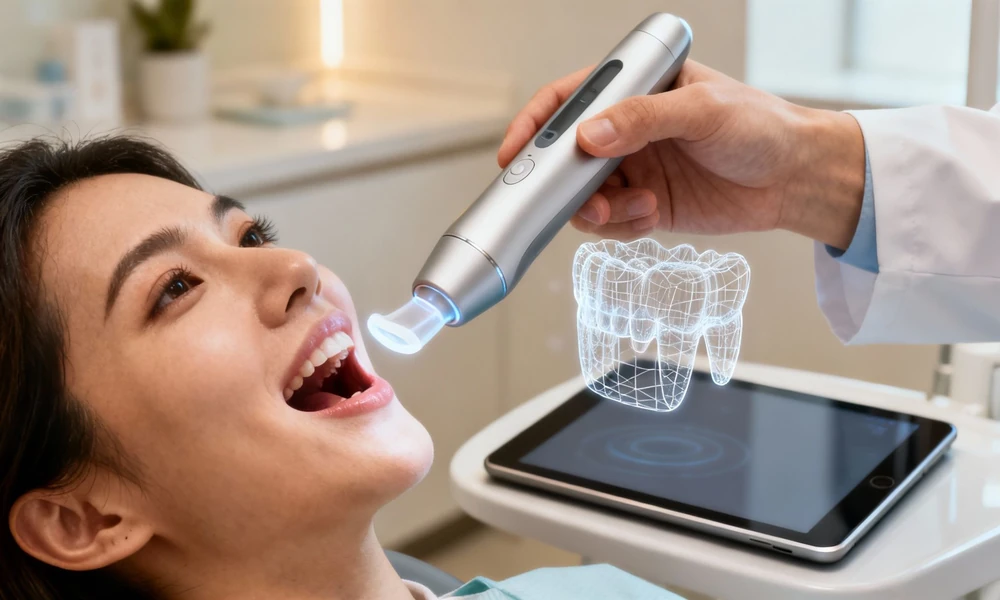
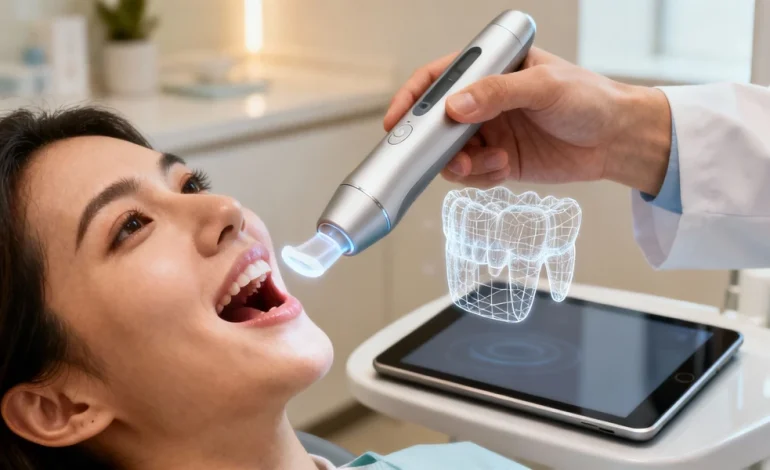
Yes, and for many patients this is where the difference feels most real. Digital scanning can replace messy impressions in some cases, which is a relief if you gag easily or if your child struggles to sit through older methods. Three dimensional imaging can also give a clearer view of teeth, roots, and bone, which helps with orthodontic planning, wisdom teeth evaluation, and implant related care.
Instead of working from limited views, dentists can often see the mouth in greater detail. That may lead to better fitting restorations and better planning before treatment even begins. A study on digital workflows and advanced imaging in dentistry highlights how digital systems can improve precision and support more efficient care.
So, where does that leave you if you are simply trying to book a cleaning or ask about a crown? It means that even routine care can benefit from tools that save time, reduce remakes, and make communication easier.
What about same day restorations and minimally invasive tools?
Another major shift in emerging dental technologies is the move toward conservative treatment. Better imaging and digital design can help dentists preserve more natural tooth structure. In some offices, chairside systems can design and create certain restorations with fewer appointments. That may mean less time away from work or school and fewer temporary fixes between visits.
For families, the value is not just speed. It is predictability. If a cracked tooth can be scanned, designed, and restored with a tighter fit, that may lower the chance of delays or repeat adjustments. If a cavity is caught earlier through smarter imaging, treatment may stay smaller and simpler.
Which new family dentistry technologies offer the clearest day to day benefits?
| Technology | What It Helps With | Possible Benefit for Families | Things to Ask Your Dentist |
|---|---|---|---|
| AI assisted diagnostics | Spotting early decay, bone loss, and patterns on images | Earlier detection and clearer treatment discussions | How is this tool used in diagnosis, and is the dentist reviewing every result personally? |
| Digital scanning and 3D imaging | Impressions, orthodontic planning, crown design, surgical planning | More comfort, better fit, less guesswork | Will this reduce the number of visits or improve comfort for my child? |
| Same day digital restoration systems | Crowns and some other restorations | Fewer appointments and less time with temporary restorations | Am I a good candidate for same day treatment, or is a lab made option better? |
What can you do right now if you want better dental care for your family?
1. Ask how technology changes the actual experience. Do not stop at the name of the machine or software. Ask whether it reduces discomfort, shortens treatment time, or improves accuracy. The best answers will be simple and specific.
2. Request visual explanations. If digital imaging or scanning is available, ask to see what the dentist sees. This can make treatment decisions feel less confusing and more grounded in evidence, especially when discussing care for children or older relatives.
3. Focus on outcomes, not hype. The right question is not whether an office has every new tool. It is whether those tools support safer, clearer, more efficient care. A strong provider of modern family dentistry should be able to explain why a technology is useful for your needs and when a simpler option is enough.
Dental visits can feel easier when you understand what is changing and why it matters. New tools are helping many practices detect issues earlier, plan treatment with more accuracy, and make care more comfortable for patients of all ages. If you are weighing your options for a family dentist, it is okay to ask careful questions and expect clear answers. That is not being difficult. That is being informed, and your family deserves that kind of care.