How Family Dentistry Encourages Parents To Model Positive Oral Habits

You might already know the routine. You remind your child to brush, they stall, they rush through it, and somehow toothpaste ends up everywhere except on the teeth that need it. After a while, it can feel like one more daily struggle in a house already full of them. At the same time, you want your child to grow up with healthy habits, fewer dental problems, and less fear around care. That is where How Family Dentistry Encourages Parents To Model Positive Oral Habits becomes more than a nice idea. It becomes a practical way to turn daily brushing, flossing, and dental visits into something your child sees as normal, shared, and worth doing, especially with support from a dentist in Fort Wayne, IN.
When a family dentist treats both parents and children, oral care stops feeling like a rule only kids have to follow. It becomes part of family life. Children watch what you do far more than they listen to what you say, and when they see you brushing, flossing, keeping checkups, and speaking calmly about dental care, they learn that these habits matter.
Why do children copy what they see more than what they hear in family dental care?
Most parents have had this moment. You explain why brushing matters, you give the same reminder for the fifth time, and your child still resists. Because of this tension, you might wonder what is missing. Often, the missing piece is not more instruction. It is modeling.
Children learn by imitation. If oral care is framed as something adults enforce but do not actively value, kids notice. On the other hand, when they watch you brush before bed, floss without complaint, and head to your own appointment without dread, they begin to connect oral care with everyday responsibility. That is one of the clearest ways family dental care supports long term habits.
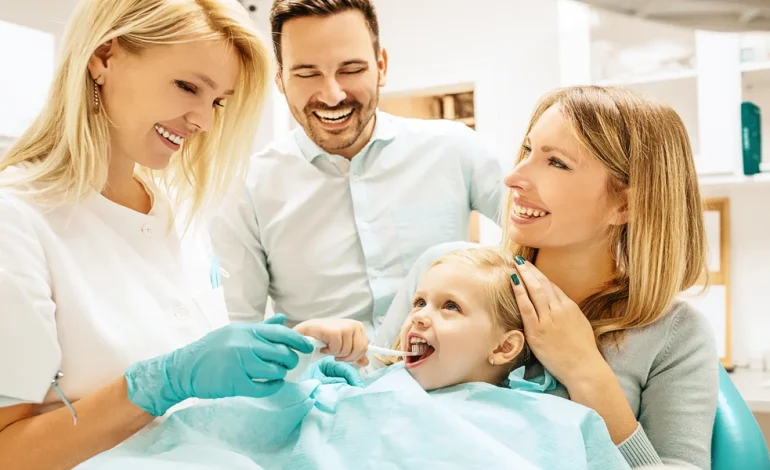
This matters at home, but it also matters in the dental office. A family dentist often creates a shared environment where parents and children receive care in one familiar setting. That can lower anxiety, reduce confusion, and build trust over time. Instead of your child feeling singled out, they see that everyone in the family takes part.
Research supports this approach. The National Institute of Dental and Craniofacial Research offers simple, proven guidance on oral hygiene habits, including brushing twice a day with fluoride toothpaste and cleaning between teeth daily. For children, the Centers for Disease Control and Prevention also shares oral health tips for children that stress early prevention and regular care. And Head Start highlights the value of engaging parents in their child’s oral health, which reinforces something many families already sense. Kids do better when parents are active participants, not just monitors.
What problems can grow when parents and children treat dental habits differently?
If a child hears, “Go brush your teeth,” but never sees the adults around them do the same, the message can feel hollow. That gap may lead to rushed brushing, skipped flossing, or fear around appointments. Over time, those small patterns can turn into cavities, gum irritation, bad breath, avoidable costs, and a child who associates dental care with conflict.
There is also an emotional side to this. Some parents carry their own dental anxiety from childhood. If that fear shows up in your tone, your scheduling habits, or the way you talk about treatment, your child may absorb it without anyone meaning for that to happen. So, where does that leave you? It leaves you with a powerful chance to reset the tone.
Family dentistry helps by making care more visible and more consistent. A child can see that cleanings are routine, questions are welcome, and oral health is not punishment. It is simply part of staying well, like washing hands or eating breakfast.
How does a family dentist help parents turn daily oral care into a shared routine?
A family dentist often sees patterns that busy households miss. Maybe a child is brushing, but not long enough. Maybe a parent is dealing with gum sensitivity and avoiding flossing, which a child notices. Maybe the whole family needs a simpler bedtime routine that does not depend on repeated arguments. When one dental team treats the family, advice can be more coordinated and easier to apply.
That support can be practical. A dentist may suggest brushing together for two minutes, using age appropriate amounts of fluoride toothpaste, or setting a predictable order for the evening routine. It can also be emotional. If a child sees a parent ask questions, listen, and follow through, the child learns that dental care is manageable, not scary.
Which approach works better at home when building positive oral habits?
Sometimes it helps to see the difference clearly.
| Approach | What it looks like | Likely result for children |
|---|---|---|
| Instructions only | Parents remind children to brush, but oral care happens separately or inconsistently | Kids may resist more, rush the routine, or treat brushing as a chore imposed on them |
| Shared modeling | Parents brush and floss where children can see, speak calmly about checkups, and keep their own visits | Kids are more likely to copy the routine and see dental care as normal family behavior |
| Family dentist support | One office guides both parents and children with age appropriate advice and consistent follow up | Families often build steadier habits, reduce fear, and catch problems earlier |
What can you do right now to model better oral health habits at home?
1. Make brushing visible.
If possible, brush and floss at the same time as your child. Keep it simple and repeatable. Children benefit from seeing the full routine, not just hearing reminders from another room.
2. Change the way you talk about dental visits.
Try to avoid language that signals fear, pain, or blame. Speak about cleanings and exams as normal care. If you feel nervous yourself, keep your words steady and factual. Your child is listening for more than information. They are listening for tone.
3. Keep the whole family on a regular schedule.
When parents keep their own appointments, it sends a strong message. Oral health is not just for kids. It is a lifelong part of caring for yourself. That lesson stays with children far longer than a single lecture ever could.
What does all of this mean for your family moving forward?
You do not need a perfect routine to help your child build strong habits. You just need a visible one, a steady one, and one that shows oral care belongs to everyone in the home. When parents model the behavior they want to see, children are more likely to follow it with less resistance and more confidence.
If your family has been stuck in the same brushing battles or delayed checkups, this can be the moment to shift the pattern. A family dentist can help make that change feel more natural, more consistent, and easier to maintain over time.