How to Clean a Toothbrush— The Right Way, Step by Step

Your toothbrush goes into your mouth twice a day, every day—and most people never think about cleaning it. That’s a problem, because toothbrushes accumulate bacteria, toothpaste residue, and even airborne particles (especially if stored near a toilet). Knowing how to clean a toothbrush properly is a simple but genuinely important hygiene habit that protects your oral health.
The fastest and most effective way to clean a toothbrush is to rinse it thoroughly with hot water after every use, soak it in antibacterial mouthwash weekly, and replace it every 3 months. More intensive cleaning methods are available for times when extra sanitizing is needed.
Why Cleaning Your Toothbrush Matters
After brushing, toothbrush bristles harbor:
- Oral bacteria from your mouth
- Toothpaste residue (which bacteria feed on)
- Airborne fecal bacteria if stored within 6 feet of a toilet
- Mold if stored in a damp, enclosed case
Studies have found that an uncleaned toothbrush can harbor dozens of bacterial species – most harmless but some potentially problematic, especially for people with weakened immune systems.
Daily Cleaning – After Every Use
This takes about 15 seconds and is your most important habit:
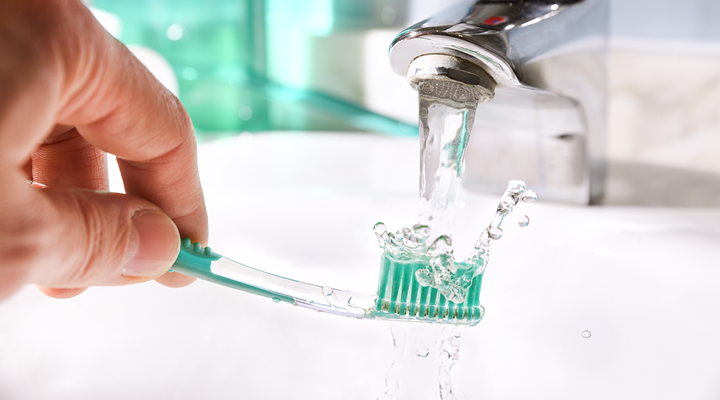
- Rinse bristles under hot running water for 15-20 seconds after brushing – this removes toothpaste, food debris, and most surface bacteria
- Shake off excess water – flick the brush to dislodge water from the bristle base
- Store upright in open air – never cap a wet toothbrush; enclosed spaces trap moisture and promote bacterial and mold growth
- Keep it away from other toothbrushes – bristle-to-bristle contact spreads germs between users
Weekly Deep Cleaning Methods
Method 1 – Antibacterial Mouthwash Soak (Easiest)
- Pour enough antiseptic mouthwash (Listerine or similar) into a small cup to cover the bristle head
- Submerge the bristles for 30-60 seconds
- Rinse thoroughly with water afterward
- Allow to air dry completely
This kills most bacteria and is safe to do 2-3 times per week if desired.
Method 2 – White Vinegar Soak
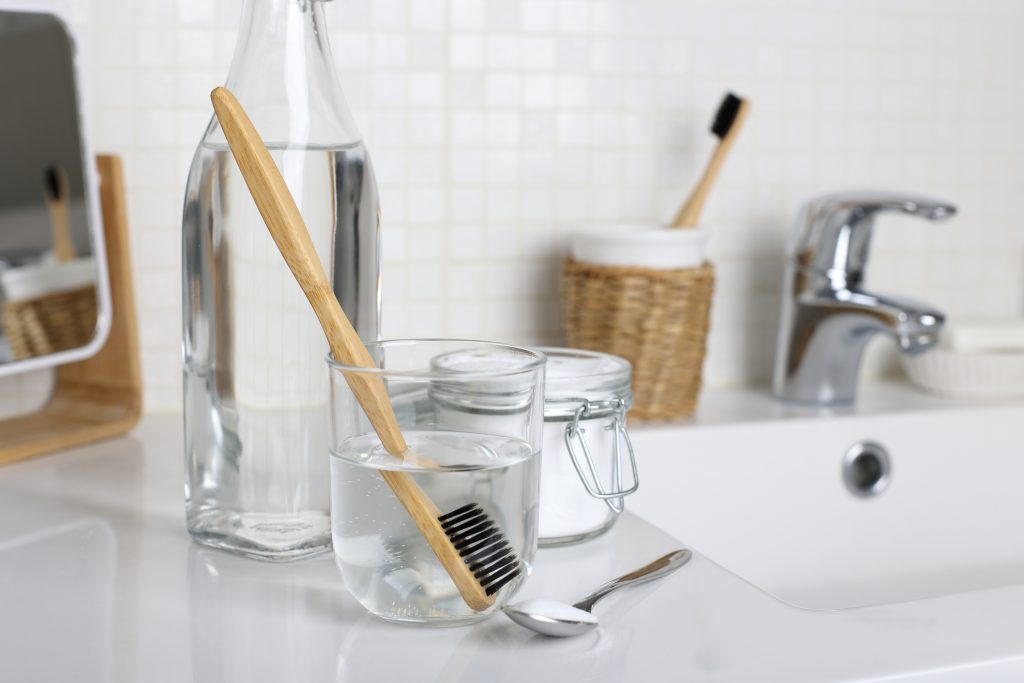
- Fill a small cup with undiluted white vinegar
- Soak bristle head for 30 minutes
- Rinse thoroughly with cold water
- Air dry
White vinegar is antimicrobial and breaks down mineral buildup from toothpaste. Good for monthly deep cleaning.
Method 3 – Baking Soda Rinse
- Mix 1 teaspoon of baking soda in a cup of water
- Soak bristles for 15 minutes
- Rinse well and air dry
Baking soda neutralizes acids and kills some bacteria – gentler than vinegar, good for regular use.
Method 4 – Hydrogen Peroxide Soak
- Pour a small amount of 3% hydrogen peroxide into a cup
- Soak bristle head for 10-15 minutes (no longer – extended soaking damages bristles)
- Rinse thoroughly and air dry
One of the most effective methods for killing bacteria and viruses. Good to use after being sick.
Cleaning Methods to Avoid
|
Method |
Why to Avoid |
|---|---|
|
Boiling in water |
Damages bristles and melts the handle |
|
Dishwasher |
High heat warps and damages toothbrush |
|
Microwave |
Can melt the toothbrush and create fire risk |
|
Harsh chemical disinfectants |
Unsafe residue remains on bristles |
|
UV sanitizers |
Mostly unnecessary if other methods are used consistently |
After Being Sick – Extra Steps
If you’ve had a cold, flu, strep throat, or oral infection:
- Soak the brush head in hydrogen peroxide for 10 minutes immediately after recovery
- Or simply replace the toothbrush – especially after strep throat (bacteria can re-infect from bristles)
- Never share a toothbrush during or after illness
How to Store Your Toothbrush Properly
|
Good Storage Practice |
Why It Matters |
|---|---|
|
Store upright in open air |
Allows bristles to dry between uses |
|
Keep in a ventilated area |
Reduces moisture accumulation |
|
Keep toilet lid closed when flushing |
Reduces airborne bacterial spread |
|
Keep at least 6 feet from the toilet |
Reduces fecal bacteria contamination |
|
Don’t cap while wet |
Caps trap moisture and breed bacteria |
If you use a travel case, let the toothbrush dry completely before capping it – even a few minutes of air drying helps.
When to Replace Your Toothbrush
|
Situation |
When to Replace |
|---|---|
|
Regular use |
Every 3 months |
|
After any illness (cold, flu, strep) |
Immediately after recovery |
|
Frayed or splayed bristles |
Right away – ineffective cleaning |
|
After dental procedures |
After significant oral infections |
|
Children’s brushes |
Every 3 months or sooner (more wear) |
Frayed bristles are the clearest sign – once the bristles start bending outward, the brush is cleaning less effectively regardless of how clean it is.
Bottom Line
Cleaning your toothbrush doesn’t require complicated products or much time. A thorough rinse with hot water after every use handles the daily basics. A weekly soak in mouthwash or hydrogen peroxide keeps bacterial load low. Store it upright in open air – never in a closed, damp container – and replace it every three months without fail. These simple habits make a real difference in your oral health.